Spiderweb Lampshade Ribbing: Free Crochet Pattern
Introduction
This Spiderweb Lampshade Ribbing is the perfect little project for anyone who wants a touch of Halloween charm without committing to a full costume. It's a tapered, ribbed crochet cover worked in soft lilac chenille, so it slips snugly over a small lampshade and gives off a cozy, textured glow. The front and back post ribbing makes the fabric stretchy and squishy, while a simple crocheted spiderweb appliqué and a tiny stuffed spider add a playful, spooky-cute detail. If you can single crochet and you're ready to learn front and back post stitches, this advanced-beginner pattern is a fun, fast win.
Materials Needed
- Yarn: Super bulky (weight 6), polyester chenille. Color A (Lilac): 120 yd. Color B (Black): 10 yd.
- Hook: 6.5 mm (K-10.5) crochet hook.
- Notions: Stitch marker, tapestry needle, small amount of polyester fiberfill for the spider, scissors.
- Finished size: Fits a lampshade with a top circumference of 12" (30 cm), bottom circumference of 18" (46 cm), and height of 8" (20 cm).
Abbreviations
- ch — chain
- sl st — slip stitch
- sc — single crochet
- dc — double crochet
- fpdc — front post double crochet (work the dc around the post of the stitch in front, pushing the post toward you)
- bpdc — back post double crochet (work the dc around the post of the stitch behind, pushing the post away from you)
- inc — increase (work 2 sc in the same stitch)
- dec — decrease (single crochet 2 stitches together)
- sk — skip
- sp(s) — space(s)
- MR — magic ring
- st(s) — stitch(es)
Gauge
8 stitches and 8 rows = 4" (10 cm) in front/back post ribbing pattern. To check, crochet a small swatch in the ribbing and measure a 4" section; adjust your hook size if needed so the cover fits the lampshade snugly.
Tips Before You Start
- Chenille yarn can shed and is tricky to unravel, so work slowly and keep your tension even — avoid frogging more than necessary.
- Use a stitch marker at the start of each round so you always know where to join.
- When working post stitches, keep the posts pushed consistently forward or back so the ribbing stays neat and stretchy.
- Try the cover on the lampshade as you go; the ribbing stretches, so a snug fit is exactly right.
Step-by-Step Instructions
Cover (Color A)
Set-up: Ch 24, join with sl st to first ch to form a ring, being careful not to twist.
R1: Ch 1, sc in each ch around, join with sl st to first sc (24 sts).
R2: Ch 1, [fpdc, bpdc] around, join with sl st to first fpdc (24 sts).
R3–20: Ch 1, fpdc in each fpdc, bpdc in each bpdc around, join with sl st to first fpdc (24 sts).
Fasten off.
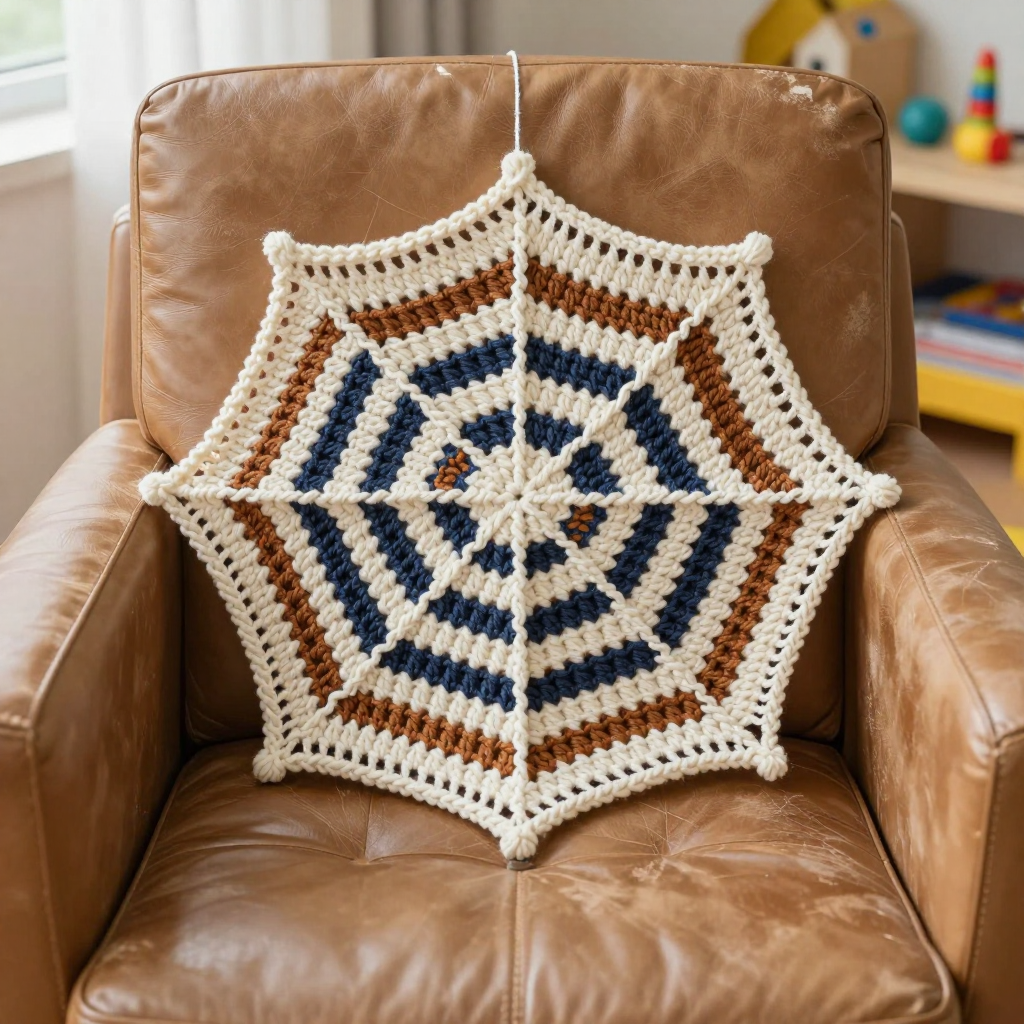
Spiderweb Appliqué (Color B)
Set-up: Make a magic ring, ch 1.
R1: 6 sc in ring, join with sl st to first sc (6 sts).
R2: Ch 1, [sc, ch 3, sc] in each sc around, join with sl st to first sc (12 sc, 6 ch-3 sps).
R3: Ch 1, [sc in next sc, ch 4, sk next ch-3 sp, sc in next sc] around, join with sl st to first sc (12 sc, 6 ch-4 sps).
R4: Ch 1, [sc in next sc, ch 5, sk next ch-4 sp, sc in next sc] around, join with sl st to first sc (12 sc, 6 ch-5 sps).
Fasten off, leaving a long tail for sewing.
Spider (Color B)
Body:
R1: MR, 6 sc in ring (6 sts).
R2: Inc in each st around (12 sts).
R3–4: Sc in each st around (12 sts).
R5: Dec around (6 sts). Stuff lightly. Fasten off.
Head:
R1: MR, 4 sc in ring (4 sts).
R2: Inc in each st around (8 sts).
R3: Sc in each st around (8 sts). Fasten off, leaving a tail. Sew head to body.
Legs (make 8): Ch 8, sl st in each ch across. Fasten off, leaving a tail. Sew 4 legs to each side of the body.
Assembly and Finishing
Sew the spiderweb appliqué to the front of the cover using the long tail and Color B, positioning the center about 3" from the top edge. Sew the spider to the edge of the web using Color B. Weave in all ends. Lightly block the cover by misting with water and smoothing it over the lampshade to shape; let it dry fully before use.
Pro Tips and Variations
- Swap lilac for orange or charcoal for a different seasonal look, or use glow-in-the-dark yarn for the web.
- Add a few tiny bead "flies" caught in the web for extra detail.
- Make the spider in a contrasting color and add small safety eyes for a friendlier face.